| Language and Social Media |  |
|
|
 |
BUFFLEHEAD Sailing Canoe Features
 You may notice that this design just looks right the first first time you lay eyes
on it. This canoe has the look of balance, because the hull, deck and
rig all harmonize well together. It is functional,
with no extra frills keeping it simple and pure. BUFFLEHEAD is as relaxed as her skipper, in a spacious cockpit on a
comfortable seat, sheet and rudder in hand, as close to wind and the water as
possible. Most modern designs look tense, impatient on their mooring, as if they cannot wait to plow the water at 20
knots as soon as the moorings are released.
This boat fits in with nature, like she belongs here and now. She is Zen, radiating an atmosphere of meditative
calmness.
You may notice that this design just looks right the first first time you lay eyes
on it. This canoe has the look of balance, because the hull, deck and
rig all harmonize well together. It is functional,
with no extra frills keeping it simple and pure. BUFFLEHEAD is as relaxed as her skipper, in a spacious cockpit on a
comfortable seat, sheet and rudder in hand, as close to wind and the water as
possible. Most modern designs look tense, impatient on their mooring, as if they cannot wait to plow the water at 20
knots as soon as the moorings are released.
This boat fits in with nature, like she belongs here and now. She is Zen, radiating an atmosphere of meditative
calmness.
Unpretentious, Functional, Consistent, quite simply beautiful.
When the canoe learned to sail
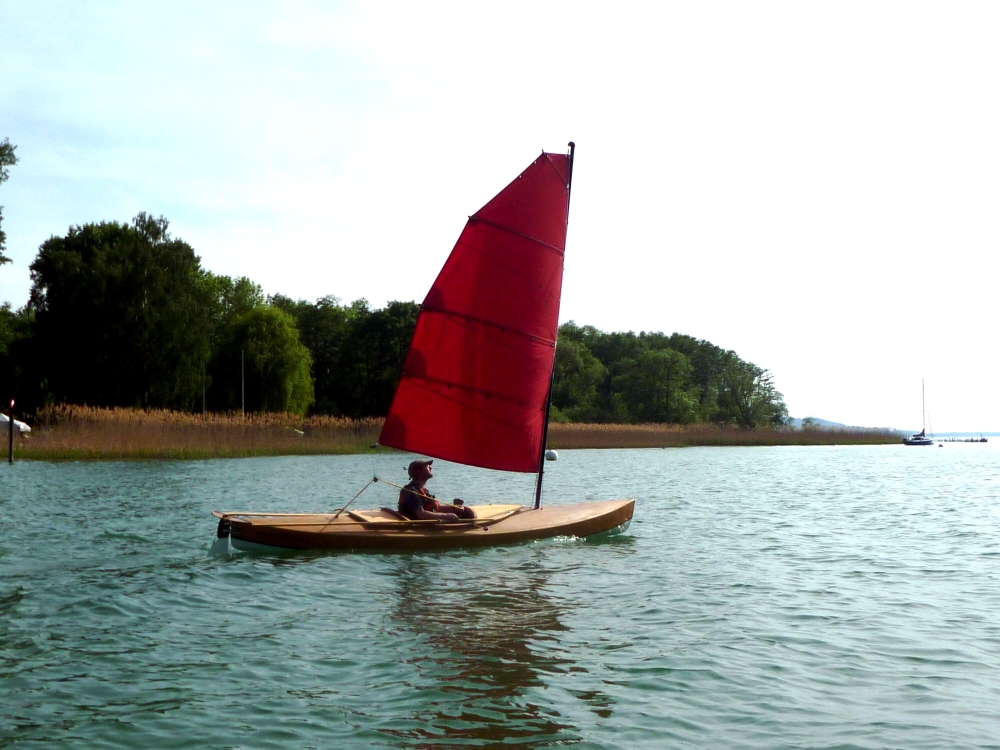 Canoe sailing has some history. Some 150 years ago, it was absolutely
en vogue among the young gentlemen. The
sailing canoe was not only used for entertainment between supper and tea but also for expeditions:
John MacGregor took long
spectacular trips along the coast and wrote several books on that
subject. Sadly around 1900, travelling by bicycle on the then idyllic streets was invented, and the sailing canoe went
out of fashion.
Canoe sailing has some history. Some 150 years ago, it was absolutely
en vogue among the young gentlemen. The
sailing canoe was not only used for entertainment between supper and tea but also for expeditions:
John MacGregor took long
spectacular trips along the coast and wrote several books on that
subject. Sadly around 1900, travelling by bicycle on the then idyllic streets was invented, and the sailing canoe went
out of fashion.
BUFFLEHEAD's design was heavily influenced by these boats, but she is built with today's materials and
state-of-the art building techniques. Ironically, it is made like those overpowered
motorboats but with its classic appearance you can sail on by in relaxed amusement with no concern for low fuel or raucous noise.
A "50-50"-canoe...
 Hugh Horton is the Designer of the BUFFLEHEAD sailing canoe. His designs are the result of his
actual experience.
Hugh has travelled several thousand miles in a variety of small boats over decades. He designed this one as his perfect
escape vehicle. This design is referred to as a "50-50-canoe; sail when you can, paddle when you must". Accordingly,
this canoe has plenty of buoyancy with its full bow and stern sections to be a worry-free sailor. It's wide enough
to allow ample sail area and narrow enough to be paddled with a double paddle. The battened
sail on the short mast and
spars has a perfect shape and can be reefed several times. When paddling becomes necessary the whole rig is easily stowed
inside the boat. BUFFLEHEAD has payload allowances for camping gear and food for one or two weeks. Or the spacious cockpit
can carry an additional passenger for a lovely day cruise. A spray skirt can be added to close the cockpit aiding in
keeping the water out in rough seas.
Hugh Horton is the Designer of the BUFFLEHEAD sailing canoe. His designs are the result of his
actual experience.
Hugh has travelled several thousand miles in a variety of small boats over decades. He designed this one as his perfect
escape vehicle. This design is referred to as a "50-50-canoe; sail when you can, paddle when you must". Accordingly,
this canoe has plenty of buoyancy with its full bow and stern sections to be a worry-free sailor. It's wide enough
to allow ample sail area and narrow enough to be paddled with a double paddle. The battened
sail on the short mast and
spars has a perfect shape and can be reefed several times. When paddling becomes necessary the whole rig is easily stowed
inside the boat. BUFFLEHEAD has payload allowances for camping gear and food for one or two weeks. Or the spacious cockpit
can carry an additional passenger for a lovely day cruise. A spray skirt can be added to close the cockpit aiding in
keeping the water out in rough seas.
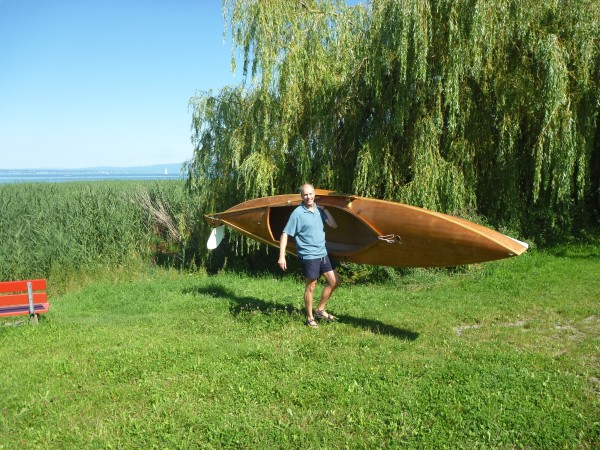 The BUFFLEHEAD is so light that you can carry it over your shoulder to the water; it is considerably lighter than a
decked fiberglass canoe off the shelf. It is easy to cartop. You can sleep comfortably inside the hull, with a
cockpit tent above you. When not in use, you can stow BUFFLEHEAD in a garage
up in the rafters or hang on the wall, she doesn't take up much space. Canoes, generally, need neither license nor are
they taxed. Even with all these features the very
functional design does not look overconstructed. In fact, it seems like Hugh Horton on his journeys did not engineer
the design with formulas and calculations but rather meditated on it and allowed every part of the boat to find its
natural place and its fairest shape.
The BUFFLEHEAD is so light that you can carry it over your shoulder to the water; it is considerably lighter than a
decked fiberglass canoe off the shelf. It is easy to cartop. You can sleep comfortably inside the hull, with a
cockpit tent above you. When not in use, you can stow BUFFLEHEAD in a garage
up in the rafters or hang on the wall, she doesn't take up much space. Canoes, generally, need neither license nor are
they taxed. Even with all these features the very
functional design does not look overconstructed. In fact, it seems like Hugh Horton on his journeys did not engineer
the design with formulas and calculations but rather meditated on it and allowed every part of the boat to find its
natural place and its fairest shape.
... for experienced sailors...
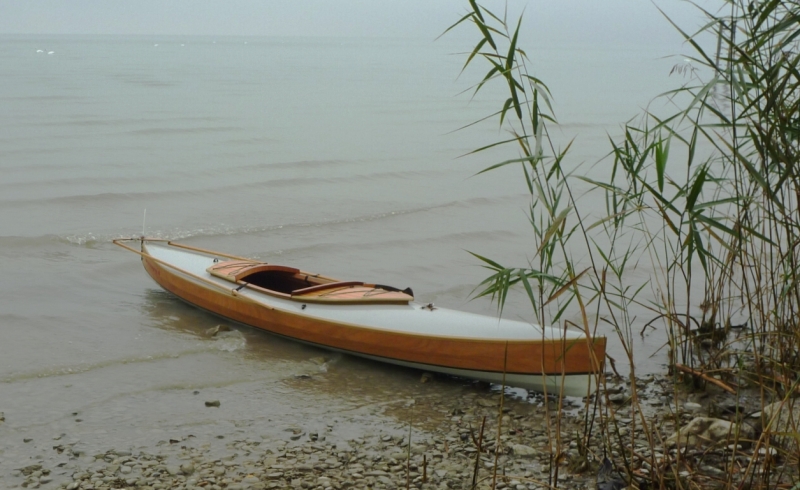 BUFFLEHEAD can be sailed very wet and wild as it is a narrow boat. If you choose to push her to the limit she'll
need a prudent and agile skipper. In spring and autumn, a dry suit or a wet suit is advisable. The boat has
flotation bags inside, but you should always carry a life jacket. If you want to
cruise for several days, you will need some grassy or sandy spot or a campground in the evening for cooking and relaxing.
BUFFLEHEAD can be sailed very wet and wild as it is a narrow boat. If you choose to push her to the limit she'll
need a prudent and agile skipper. In spring and autumn, a dry suit or a wet suit is advisable. The boat has
flotation bags inside, but you should always carry a life jacket. If you want to
cruise for several days, you will need some grassy or sandy spot or a campground in the evening for cooking and relaxing.
... and virtually unlimited use
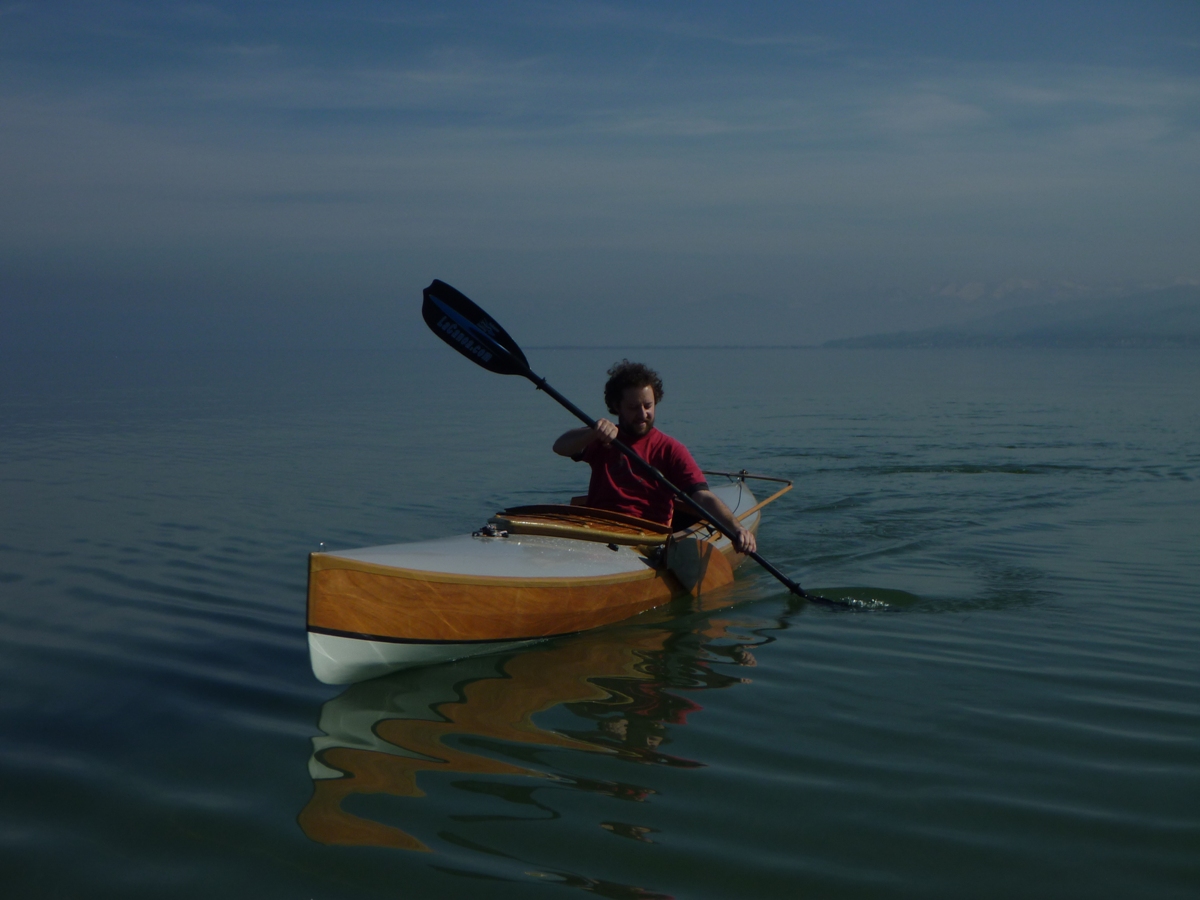 It is unbelievable how versatile the boat is. Do you dream of an afternoon on the Lake Constance, a weekend on the Swiss
Walensee followed by a descend through the Linthkanal, a month holiday on the East German lakes or the lagoons on the
Baltic coast, a trip on the Loire, Rhone or Danube, along the Italian or Croatian coastline or the coast of Cape Horn?
Treated with excellent seamanship, this boat can be used for all these trips like no other one. BUFFLEHEAD offers more
fun for less money, more seaworthiness per kilo than any other boat. I have tested the boat extensively around
rund um Elba and in the Adriatic Sea and could not find any faults!
Click here for the technical details and equipment.
It is unbelievable how versatile the boat is. Do you dream of an afternoon on the Lake Constance, a weekend on the Swiss
Walensee followed by a descend through the Linthkanal, a month holiday on the East German lakes or the lagoons on the
Baltic coast, a trip on the Loire, Rhone or Danube, along the Italian or Croatian coastline or the coast of Cape Horn?
Treated with excellent seamanship, this boat can be used for all these trips like no other one. BUFFLEHEAD offers more
fun for less money, more seaworthiness per kilo than any other boat. I have tested the boat extensively around
rund um Elba and in the Adriatic Sea and could not find any faults!
Click here for the technical details and equipment.
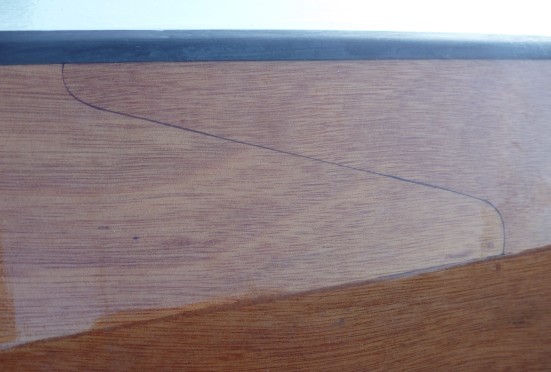 BUFFLEHEAD is not an easy boat to build. The reason is not its functionality:
other designs, like
Bolgers Peero,
are nearly as versatile, but look like floating shoe boxes. BUFFLEHEAD's aesthetics and the modern ultralight building
technique, KevlarTM and carbon fibers, make the hull extremely tough but drive the price up and increase
the construction time. Experts can build the boat so accurately that it can be varnished.
BUFFLEHEAD is not an easy boat to build. The reason is not its functionality:
other designs, like
Bolgers Peero,
are nearly as versatile, but look like floating shoe boxes. BUFFLEHEAD's aesthetics and the modern ultralight building
technique, KevlarTM and carbon fibers, make the hull extremely tough but drive the price up and increase
the construction time. Experts can build the boat so accurately that it can be varnished.
Author's note
It was a 'Merican who edited that text and made it much more comprehensive. Chuck, thank you ever so much for your work.
- Bootsbaugarage builds hulls or complete boats
- Plans are available directly from Hugh Horton.