 Long trips are exhausting. All the more important is comfort. This starts with a comfortable, ergonomically adjustable
seat. All the boat's controls must be within easy reach: sheet and rudder, trim lines, sails that can be reefed with one
hand. Safety: in rough weather the entire rig can be dismantled on the water in less than a minute and stowed inside the
boat. The cockpit covers protect against spray and keep the boat dry.
Long trips are exhausting. All the more important is comfort. This starts with a comfortable, ergonomically adjustable
seat. All the boat's controls must be within easy reach: sheet and rudder, trim lines, sails that can be reefed with one
hand. Safety: in rough weather the entire rig can be dismantled on the water in less than a minute and stowed inside the
boat. The cockpit covers protect against spray and keep the boat dry.
| Language and Social Media |  |
|
|
 |
BUFFLEHEAD Sailing Canoe
Sail when you can, paddle when you want
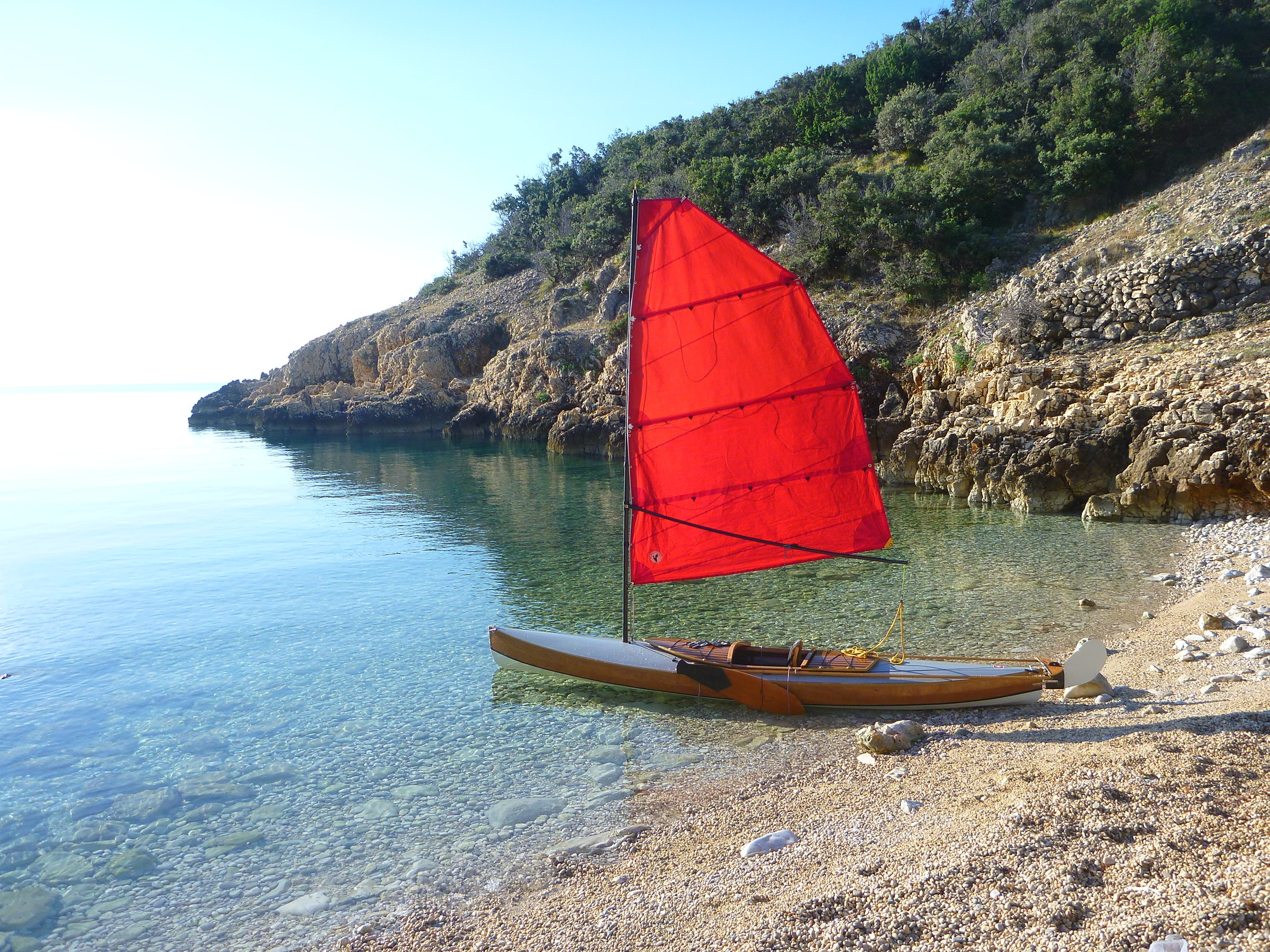 BUFFLEHEAD is a spacious, decked expedition and travel canoe that you can sail as
well as paddle. The boat is very stable due to its width and very comfortable thanks to its adjustable seat:
BUFFLEHEAD is a spacious, decked expedition and travel canoe that you can sail as
well as paddle. The boat is very stable due to its width and very comfortable thanks to its adjustable seat:
- with plenty of space for camping gear, food and water
- or space for a passenger
- Sufficiently stable to be sailed without outriggers
- light enough to load her on a roof rack without help
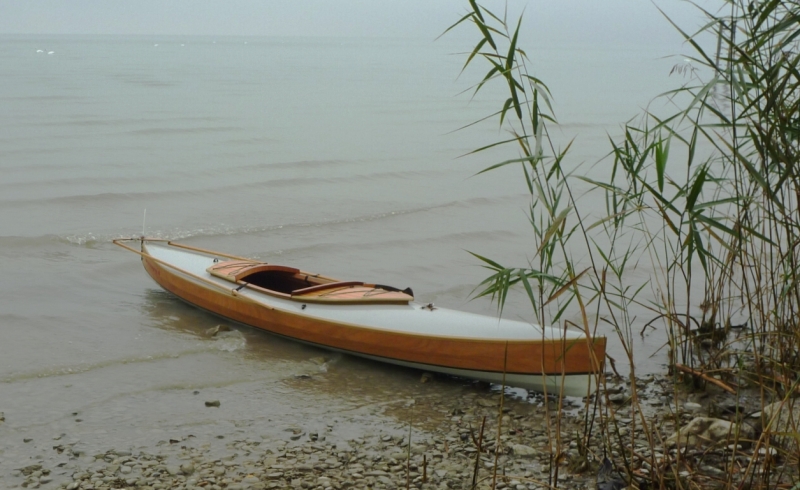
- 4.70 m x 85 cm
- Cartop weight - 23 to 25 kg
- Sail Area - 4.3 to 5.4 sqm
- Displacement - 175 kg
We manufacture complete boats and hulls for self-assembly. Plans are available from Hugh Horton.
Hull and deck
 Composite building technology: The hull is constructed from a core of 3mm Okoume
marine plywood, coated inside and out with fibreglass. This coating cures transparent. It is possible to clear coat
the boat in order to show the wooden structure.
Composite building technology: The hull is constructed from a core of 3mm Okoume
marine plywood, coated inside and out with fibreglass. This coating cures transparent. It is possible to clear coat
the boat in order to show the wooden structure.
The deck is made of strips or plywood planks and is coated inside and out with fiberglass fabric. The all-round rubbing
strake made of KevlarTM tape is considerably lighter and more robust than a conventional wooden rubbing strake.
Rig and sail
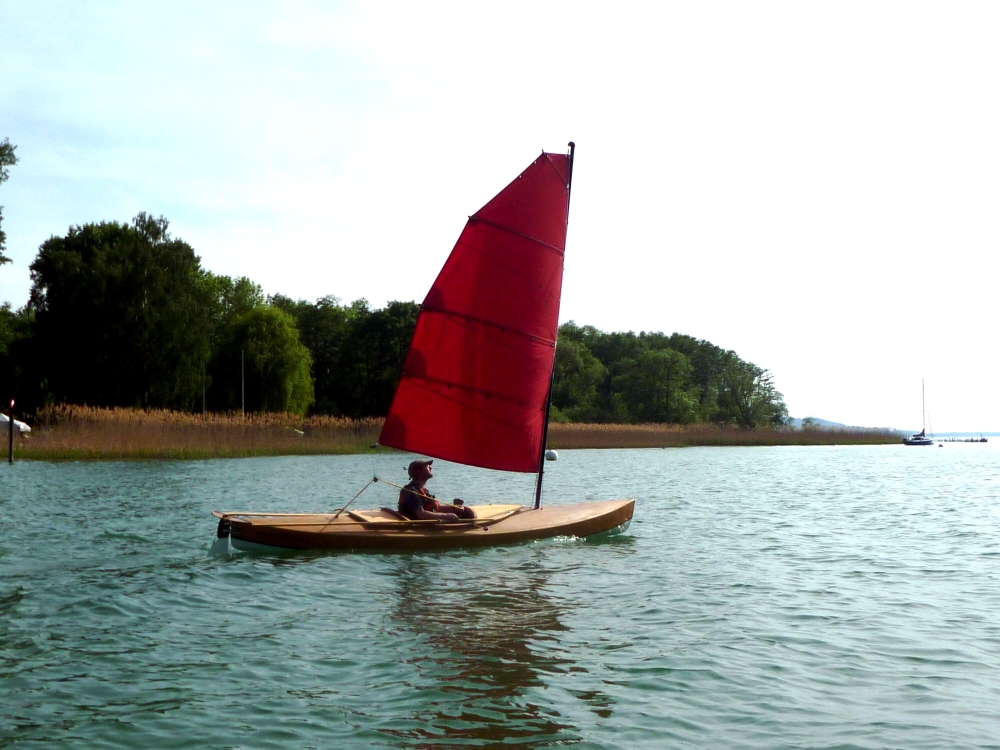 BUFFLEHEAD can be used with the 4.3 sqm dacron lugsail or with the
5.4 sqm dacron sail.
The fully battened 5.4 sqm dacron sail is particularly suitable for long trips. It is available in white, red or
black, has three reefs that can be operated with one hand and stands perfectly.
BUFFLEHEAD can be used with the 4.3 sqm dacron lugsail or with the
5.4 sqm dacron sail.
The fully battened 5.4 sqm dacron sail is particularly suitable for long trips. It is available in white, red or
black, has three reefs that can be operated with one hand and stands perfectly.
The lugsail comes with a two-part carbon mast, the 5.4 square meter dacron sail has a
three-part carbon mast, rotating freely without shrouds.
The lugsail has light wooden spars, the 5.4 sqm Dacron sail has a two-part
aluminum-carbon boom. Both rigs can be easily dismantled on the water and stowed
completely in the boat.
Seat
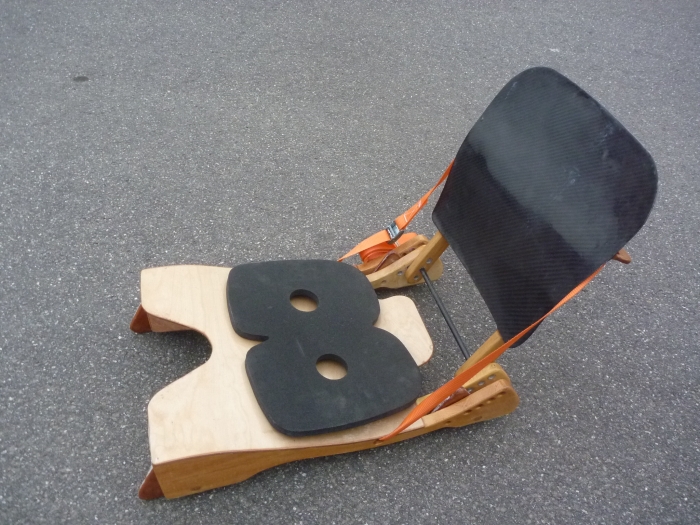
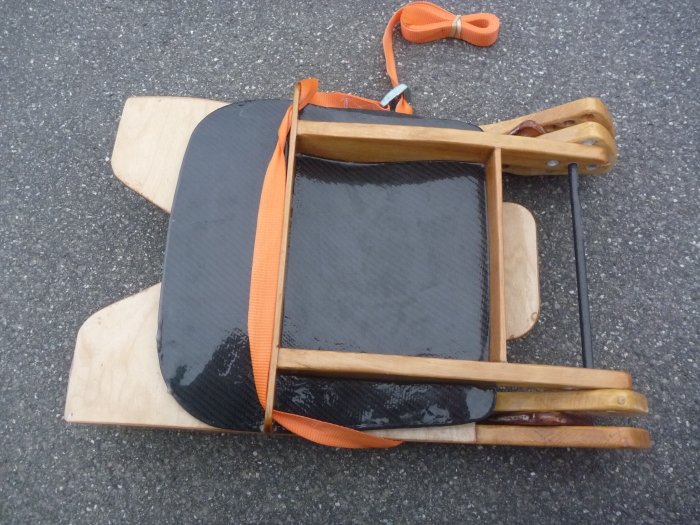 For ultimate comfort. The seat can be moved freely in the cockpit. The angle of the ergonomically shaped backrest
made of carbon fibre laminate is infinitely adjustable. The height of the seat can be adjusted for a high, upright
position when paddling and a low, reclined position when sailing. Floatable and foldable. Plans for a seat with
comparable features can be found here. A randonneur seat with a split elasticated
backrest, which supports the rotation of the torso and enables active paddling, is available on request.
For ultimate comfort. The seat can be moved freely in the cockpit. The angle of the ergonomically shaped backrest
made of carbon fibre laminate is infinitely adjustable. The height of the seat can be adjusted for a high, upright
position when paddling and a low, reclined position when sailing. Floatable and foldable. Plans for a seat with
comparable features can be found here. A randonneur seat with a split elasticated
backrest, which supports the rotation of the torso and enables active paddling, is available on request.
Leeboard and rudder
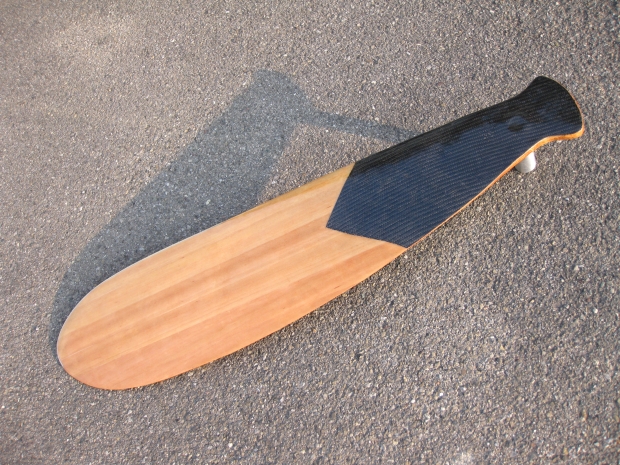
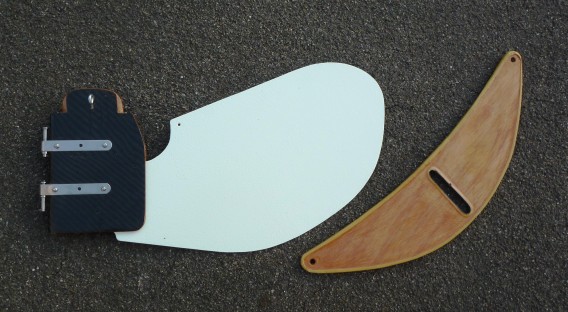 Leeboard made from clear red cedar, coated with glass fiber and carbon in the upper part. Trailing edge reinforced
with a glass cord. NACA profie. Rotating axle made of aluminum tube. A slip clutch ensures that the blade automatically
comes up when it touches the ground. Weight: approx. 1,100 g. Leeboard mount
made of KevlarTM-coated carbon tube, incorporated directly into the transition between deck and hull.
Leeboard made from clear red cedar, coated with glass fiber and carbon in the upper part. Trailing edge reinforced
with a glass cord. NACA profie. Rotating axle made of aluminum tube. A slip clutch ensures that the blade automatically
comes up when it touches the ground. Weight: approx. 1,100 g. Leeboard mount
made of KevlarTM-coated carbon tube, incorporated directly into the transition between deck and hull.
Rudder with pre-balanced, retractable rudder blade, silver fir rudder stocks on both side decks.
Spray boards
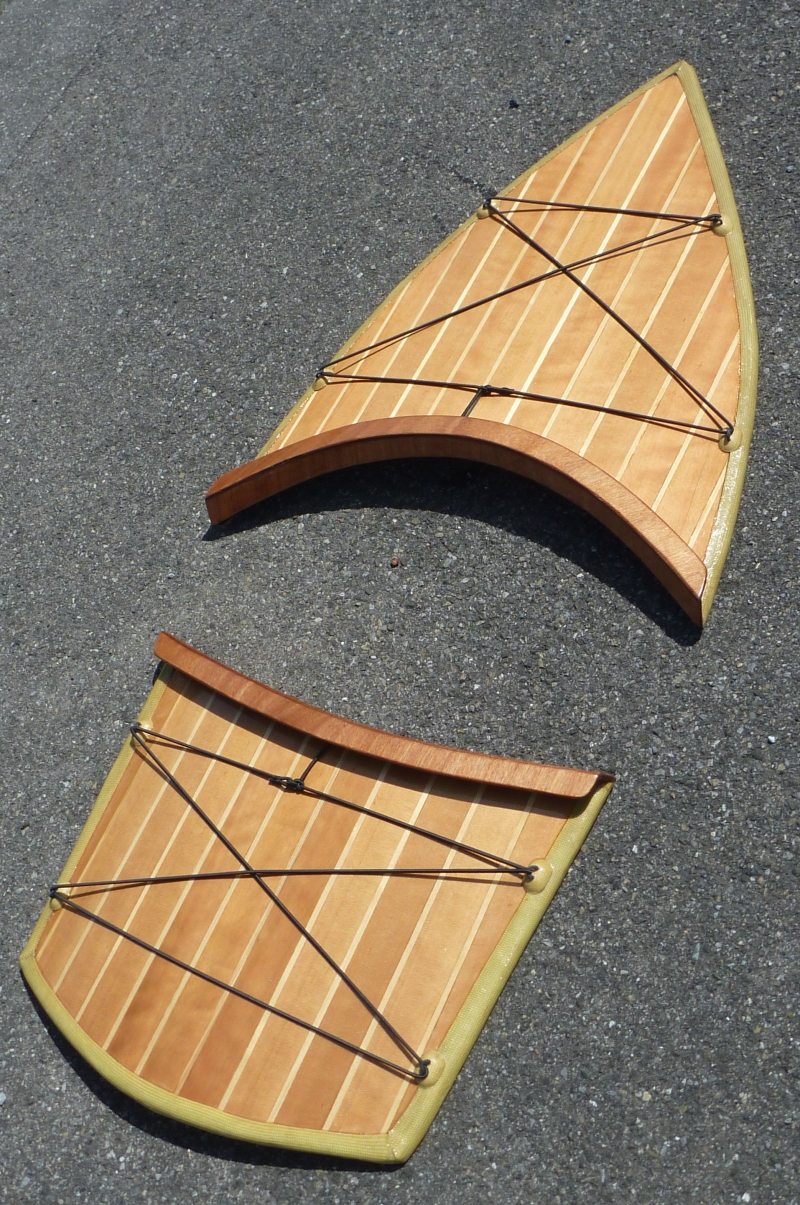 Reduce the size of the cockpit and keep the canoe dry in heavy weather. Removable, so that the interior remains
easily accessible. With ultra-light lashing eyes and elastic tension straps, for stowing light luggage or hold a
compass, GPS and water bottle. Both cockpit panels together weigh just 2,500 g.
They are real eye-catchers. It is therefore worthwhile using particularly beautifully grained wood or an interesting
plank pattern. How about a wind rose inlay, seahorse, dolphin or seagull?
Reduce the size of the cockpit and keep the canoe dry in heavy weather. Removable, so that the interior remains
easily accessible. With ultra-light lashing eyes and elastic tension straps, for stowing light luggage or hold a
compass, GPS and water bottle. Both cockpit panels together weigh just 2,500 g.
They are real eye-catchers. It is therefore worthwhile using particularly beautifully grained wood or an interesting
plank pattern. How about a wind rose inlay, seahorse, dolphin or seagull?