Verlen Kruger and Valerie Fons' Long Trip
- Verlen Kruger and Valerie Fons' Long Trip - Back to Part 1
- Verlen Kruger and Valerie Fons' Long Trip - Back to Part 2
- Verlen Kruger and Valerie Fons' Long Trip - Back to Part 3
- Verlen Kruger and Valerie Fons' Long Trip - Continue to Part 5
Part 4, "An Achievement - the Mother of Journeys," continues
First published in SCA JAN/FEB 2004 #25
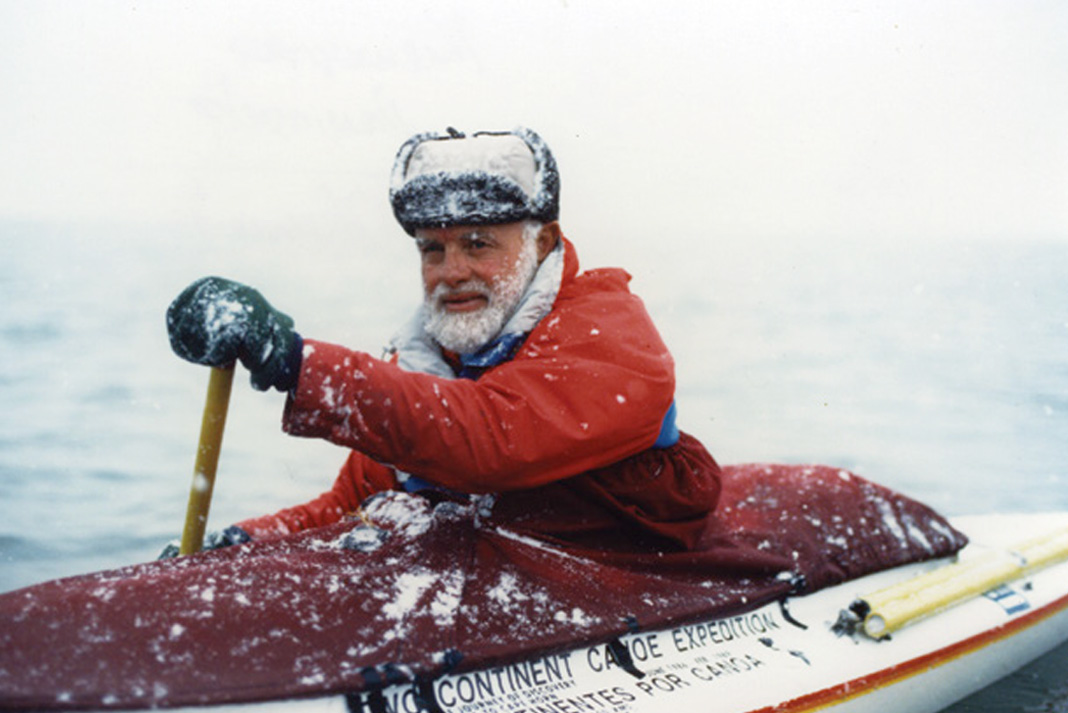 We left Verlen Kruger with the canoes in Punta Arenas, Argentina, 1989 January, less than 200 miles from Cape Horn.
In Houston, Valerie Fons was undergoing neurological tests. A doctor had told her to quit the trip. Her husband, Verlen,
had flown back to Punta Arenas after an ophthalmologist fitted him with appropriate sun glasses and told him his eyes
would be okay.
We left Verlen Kruger with the canoes in Punta Arenas, Argentina, 1989 January, less than 200 miles from Cape Horn.
In Houston, Valerie Fons was undergoing neurological tests. A doctor had told her to quit the trip. Her husband, Verlen,
had flown back to Punta Arenas after an ophthalmologist fitted him with appropriate sun glasses and told him his eyes
would be okay.
Valerie and Verlen began above the Arctic Circle in June of 1986, and paddled into the mouth of the MacKenzie River. They came south by way of Lake Superior, down to Detroit, over to the Ohio River Drainage, and to the Gulf of Mexico in March of 1987. After the Bahamas and Caribbean came South America and the Orinoco, the Amazon, and the Parana Rivers to Buenos Aires in August of 1988. Back on the ocean, they crashed in surf; Valerie was hurt. Verlen's eyes were increasingly painful.
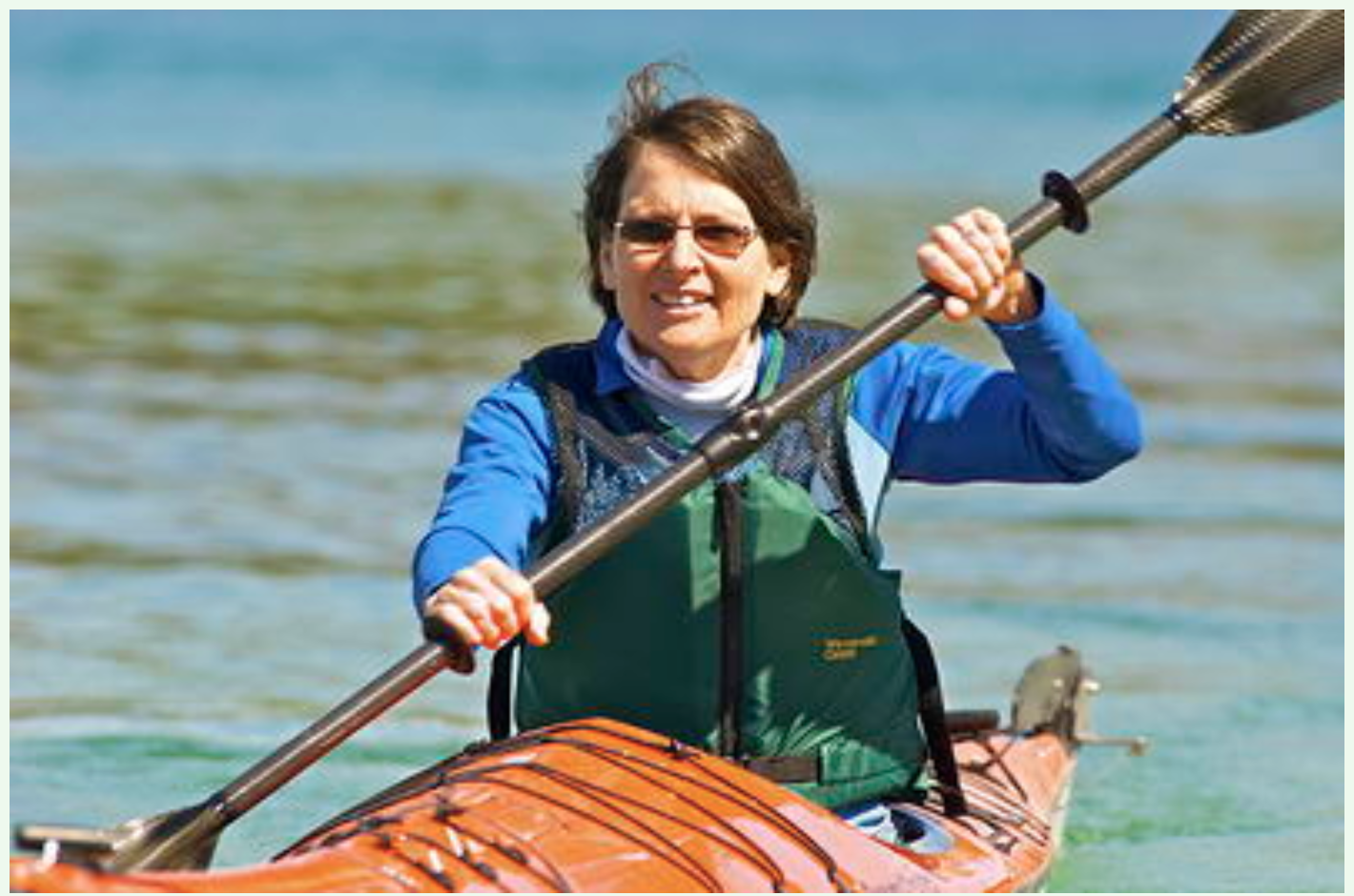 2003 August. In Michigan Valerie emailed she'd been paddling in a square tailed Grumman canoe, on the modest and
comfortable Au Sable River, with husband Joe and their adopted and foster kids. Four year old Shammond was a "hood
ornament" on the bow. Joshua, four, had a hand over the side. Micala, six, watched for fish. Steve, nine, wanted to race
every inner tuber, every boat. All had sunglasses from the same bargain table. Valerie said she was "joyful, disguised
as mom in the stern," and "gleeful" at passing all other boats and floaters and seeing the reactions. Lorrina three, and
Kayla eleven months, hadn't come yet.
2003 August. In Michigan Valerie emailed she'd been paddling in a square tailed Grumman canoe, on the modest and
comfortable Au Sable River, with husband Joe and their adopted and foster kids. Four year old Shammond was a "hood
ornament" on the bow. Joshua, four, had a hand over the side. Micala, six, watched for fish. Steve, nine, wanted to race
every inner tuber, every boat. All had sunglasses from the same bargain table. Valerie said she was "joyful, disguised
as mom in the stern," and "gleeful" at passing all other boats and floaters and seeing the reactions. Lorrina three, and
Kayla eleven months, hadn't come yet.
Valerie was happy to, "share the river with my kids... and have confidence to get them fifteen miles down the river and safely home. I was reminded of the Two Continent by paddling. Paddling felt so good again, strong and steady." 1989, January 26, Valerie had called from Houston. Verlen had flown back to Punta Arenas, Argentina that night.
She worried me. She was distressed about his eyes, and her cranial fluid discharge. Looking back, her usual intensity was also masking exhaustion.
In the previous thirty months she'd paddled most of 20,000 miles, keeping schedule, about twenty five miles per day on the water. Verlen was the best person to do it with, but occasionally the worst. He is kind, soft spoken and thoughtful, the implacable paddling icon and legendary paddling machine - but not the best person with whom to compare oneself.
Behind her was the savage, rattling surf-capsize and head injury after leaving Buenos Aires. She recalled criticism from Argentine paddlers of the unsuitability of their loaded boats for surf, for breaking waves. And she couldn't forget the paddler telling her she had to, "love the Patagonian winds," because if you didn't, "they will tear you apart."
On Lago Argentino's shore, in winds recorded near 100 miles per hour, they'd watched their partially loaded boats, "thrown through the air like paper airplanes." And she'd heard a secondhand report from another Michigan paddler that a few weeks before, as he approached Cape Horn, it was as rough as, "sitting with a live grenade in your lap." Now Cape Horn was before her. And the water was always colder.
1989, February 20, Howard Rice walked to the small dock in Puerto Williams on Isla Navarino, Chile, looking for a ride north. He emailed in 2003, "The backdrop was all adventure. Jagged snow-capped peaks behind puddled dirt/gravel streets at the Puerto Williams naval base. Torpedo gunboat diesels with huge vapor clouds. Argentine mountains green and white across the Beagle Channel."
Rice was letting his hands heal from the first solo kayak trip around Cape Horn. He'd paddled a Klepper Aerius I. He knew of the Two Continent trip, and had seen photos of Verlen. He'd been musing about the people he'd met so far: sailor John Ridgeway on Cape Horn, film maker Hartie Leffler in Puerto Williams, and now, walking off a Chilean naval cargo ship from Punta Arenas, comes the dapper Santa Claus figure of Verlen Kruger with a taller woman in purple synthetics.
The three went to the Chilean naval base headquarters and pitched their tents. Out of the cold at the base's bakery/restaurant, Verlen led a prayer. They told Howard their story, including the surf crash and injury. Valerie was distraught and said she couldn't finish to Cape Horn. Verlen said he'd not go alone.
Valerie peppered Howard with questions. She wanted to know about "the grenade" which she thought Howard had reported to the New York Klepper shop. As I'd heard wounded Valerie on the phone not a month before, to Howard, she was stretched very tight, startling him.
Verlen asked Howard if he'd consider staying, to attempt the Horn with him, if Valerie wouldn't go.
Howard said he'd do it, but had doubts. He was packed to return to the States. His hands weren't ready, but he was flattered. He suggested they decide the next day.
Valerie's journal after the meeting day has doubts, too. She felt vulnerable and unwell. The inner strength that had gotten her there was diminished, "but I believe that what I have is sufficient." She notes Howard's offer of assistance and equipment, and his information about water sources, cautions, spots to land. "He encouraged us."
In the morning he helped them sort and repack. Verlen offered extra fruit leathers to Howard, which angered Valerie and surprised Howard. By the afternoon Howard had repacked his Klepper for the paddle back to Cape Horn, this time with Verlen.
Verlen visited the base commander. When Verlen returned, Howard thought the commander had offered Valerie and Verlen a ride on a naval patrol boat, across Bahia Nassau to Cape Ross, less than forty miles from Cape Horn.
Howard was relieved, not just for his hands. He was dubious of the couple crossing Bahia Nassau, particularly of Valerie's condition. Bahia Nassau was as formidable as it gets. He says, "It is the first Hillary step, the Khumbu icefall, the North Face of any small boat rounding of the Horn out of Puerto Williams. Length is similar to the English Channel Dove crossing. One must hit it just right and have confidence of the next day's weather."
That afternoon a plane came which could fly Howard out. He re-packed and within a few hours was over the Beagle Channel. He didn't see Valerie and Verlen before he left, but he was confident, with the navy's help, they'd be okay.
The following day, they both met the base commander. From Valerie's journal, "He will send a ship to escort us across Bahia Nassau. This is great news. The commander is always smiling. He wants us to make it."
They paddle east a day along Isla Navarino, then south. By 3:30 p.m. the next day they reach Punta Guanaco, the southeast corner of Navarino overlooking Bahia Nassau. They walk around the point, "a ridge of wet ground with thick peat topping, really beautiful," but a heavy shore break is on both sides. Later came a ten knot southerly. By 11 that night, "the wind is pushing the tent around."
"In the morning we didn't like the looks of the sea. The wind is northeast."
But off the point was the gunboat of Captain Bidart. By radio, Bidart asked if they were ready. What is the weather? Three knots at Cabo Ross; six knots at the boat.
From Valerie's journal, "Bidart said the weather didn't look good for the next week. It was now or seemingly not at all."
They started and the wind increased to nine knots. "What is your plan, Mr. Kruger", asks Bidart on the radio. Verlen and Valerie agreed. "It (weather) just ain't right." Bidart suggested they come aboard while they can, before it's too dangerous. The gunboat's crew pulls them up by hand.
But, nearing the north tip of Wollaston Island on the south side of Bahia Nassau, from Valerie's journal, "The captain says he can't take us all the way - too shallow. So in waves bigger than when we started - exactly the reason for not doing the crossing - we're back in the water with at least two miles to paddle. Thankfully, it was not breaking too much. The ship was in a hurry to beat the weather. They dumped our canoes over the side, Verlen first, then me. Felt like a miracle when I connected with the seat. Cabo Ross looked encased in surf. As we get close, two men with dogs whistle from the hill. They point to the north side where the surf is impossible. They are insistent, but with surf on all sides and kelp in the middle, the short break at a small wooden ramp isn't too bad."
Leaving Cape Ross radio base, with 37 miles to go, Valerie wrote in her journal, "The sun shining and the day a go. All three men left the radio to go down to the canoes to say good bye. They called to Cabo Horn and told them we were coming, and they would leave the radio for a moment. Dear Elias told us we were going with God. I felt the strength of the great Christian sending us out. I pushed Verlen's rudder blade down with my paddle and we were off. Elias stood with his gun on a hill against the sky, and gave a salute of six or eight shots. The waves were very big, crashing on shore. We started crossing the bays but it was too much anxiety, wondering if the winds would open up on us. I was getting jumpy, but the wind was good."
Verlen told me, "We got a stable weather window. Val was always worried about the last stretch, but she took good time preparing herself and her boat. We took off and raced across. The wind started picking up at the end."
From Valerie, "We argued before landing. I was paddling my brains out, worried about the weather, and he stopped paddling, trying the radio. That fried me. The landing was on the east side of Cabo Hornos. The crew at Cape Horn base came down the steps to help."
Verlen said, "Kind of a lousy landing. Val jumped out; that surprised me." He added, "I was never worried she wouldn't go once she came back from Houston. It was always a go. She wouldn't let me go without her."
~HH